Tuesday, November 11, 2014

The Illuminati, Before They Were Famous - Part 2


MacGyver like you never saw him before

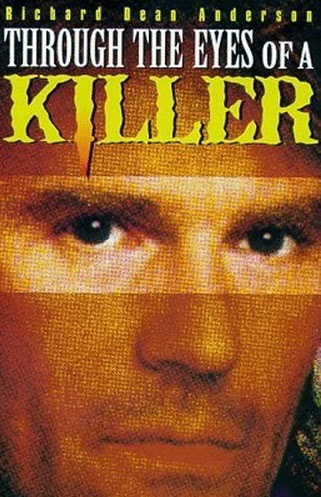
Through The Eyes Of A Killer is a TV-thriller from 1992, based on a short story by British author Christopher Fowler. It's not very high budget, but has an interesting and talented cast. Richard Dean Anderson (MacGyver) is here in the only bad-guy role I've ever seen him in, and I must admit he plays it pretty convincingly. Marg Helgenberger plays Laurie, a well educated, independent and sexually frustrated, woman, who hires Anderson's character, Ray Bellano, to refurbish a trashy old apartment. Shortly thereafter, she gets physical with him and feels like she's on cloud nine for about 20 minutes of the movie. Then they have a fallout, which ultimately sparks the premise of the movie. Tippi Hedren has a minor role as the landlady, and I wouldn't be surprised if there is some kind of hommage to an older movie there somewhere, that I haven't picked up on yet.

What makes TTEOAK so special, is that it is the only "old" movie I know of that incorporates the all-seeing eye in a directly malevolent context. It is also the only movie I've seen, period, where the eye becomes more than just a fleeting symbol to be seen here and there. In TTEOAK it is even beyond being just a plot device: it is a completely independent entity, that interacts subtly with the involved characters and affect their actions - and ultimately the outcome of the story.

The Eye continually appears with a shiny, glowing effect throughout the movie. The Eye of Providence, surrounded by sunbeams, can be found in many freemasonic lodges, as a reminder of "The Great Master Builder of All Worlds"
After watching Through The Eyes Of A Killer, I learned that it was based on a short story called The Master Builder by Christopher Fowler. This of course describes Richard Dean Anderson's character is in the movie: a superb craftsman who takes the expression from trash to treasure, to a whole new level. But it is clearly also a freemasonic reference, viewed in conjunction with the symbolism that is such a central part of the plot. I was therefore surprised, when I read Fowler's original story, to learn that the evil eye mosaic is not a part of it at all. It's not even hinted at. So whatever this nod at freemasonry and/or The Illuminati is supposed to mean, it probably came solely from the filmmakers. But let's take a closer look and speculate some more along the way (Warning: There will be spoilers).

In the first clip, Tippy hedren shows Laurie the window with the eye, and a sense of dread comes across her. The sun shining through the eye creates a mysterious light.


In the next clip, Ray sees the eye, and it is as if an exchange is taking place. This clearly isn't your everyday window decoration.


One thing noticed about the Ray Bellano character from this point onwards, was how much he looks like Adolfo Costanzo, the "Godfather of Matamoros", whose Palo Mayombe-inspired cult created mayhem across the southern US states and Mexico during the late 1980's. Costanzo's activities ended in 1989, when he commited suicide just prior to getting apprehended by the Mexican police. His followers were either arrested or died with him.

Below I have put up a screenshot from Through The Eyes Of A Killer against a picture of Costanzo, in order to demonstrate the similarities. It might well be a coincidence, since that type of dodgy haircut was all too popular in those days. But it is in no way improbable, since the Matamoros case was very well known at the time.


One night, shortly after the work on the apartment has commenced, Laurie is attacked by Ray Bellano. A rape ensues, but she decides to go in on it. When she wakes up in the morning, the eye shines briefly but knowingly at her. Laurie and Ray begin a short affair, until he seduces her best friend. Ray gives her a sinister promise, that he wont give up on her, but finishes off the apartment without any further complaints or interactions. Later, when its all set to move in, the following scene occurs:


Ray has left a "gift" for Laurie - a pyramid with an all seeing eye - a hint that she is being watched? But how? The guy at the end of the above clip is a colleague of Laurie, who tries to win her via the friendship way. But i'm not sure exactly how to interpret the scene with the knife, as there is yet no reason for him to be cautious. Maybe the eye is influencing him too? In the next scene, Laurie is beginning to sense that there is something older and more sinister about the apartment, and suspects that the eye plays a part in it.


The gift is transformed into a weapon, as Laurie bashes Ray with it. Afterwards she discovers how he could have remained hidden in the apartment - there is a hollow area within the thick walls that Ray has made into an advanced system of halls and entrances from which he could get into the apartment. Someone else than the Eye has been watching her!


In the following scene, Ray talks about how the place itself gave him power, like the inner "force" that you often hear serial killers talk about. It is therefore the place itself, expressed via The Eye, that affects the people who comes into contact with it.


Finally, Rays dies, and the most eerie scene of the whole movie plays out. It seems that The Eye decides to turn on its own device, hypnotizing him so laurie can finally get the drop on him.


So...what to conclude about this eye business? Why is it used in such a sinister context? Is there anything in the director's past works that could hint at a reason? Looking on IMDB, Peter Markles' resumé almost explicitly includes TV movies and episodes for various TV-series, most of them with a crime theme. At first glance there isn't really anything on the list that stands out, except maybe Flight 93 (2006) about the missing plane on 9-11, but even that was very non-challenging in its narrative, as far as i remember. Markles also directed a few episodes for the X files and Millenium, but these were written by someone else. Then it struck me that maybe the writer on Through The Eyes Of A Killer was the real culprit. He is listed on IMDB as Solomon Isaacs, a name that sounds like it could have been made up for the occasion. Indeed, there is no other listed works attributed to him, nor could I find any other info about him anywhere. I even tried writing Christopher Fowler about it, but he never answered. So I'm afraid the trail ran cold there.

Finally, there is one question left asking: Is the film worth watching? Well, you got some major spoilers from reading all this, but why not, it isn't half bad. Just remember to check your apartment thoroughly before going to sleep.


Part 1 here.

Thursday, November 6, 2014

Flying Saucers In Time

Finding depictions of "flying saucers" from before late June, 1947 is an ongoing process, that has been slowly accumulating, as researchers have backtracked through the various possible areas of influence prior to Kenneth Arnold's sighting. It's not that there weren't lots of spaceships all over popular culture during the 1930's and 40's, but it was mostly craft of rocket-shaped design that appeared in the early sci-fi pulps, comics and serials. Nevertheless there are quite a few examples of saucers to be found, even prior to those outlets - just take a look at the gallery over at UFOPOP. Stories about saucer-shaped time machines, on the other hand, are a bit more rare - but recently I found precisely such a tale in an Canadian comic from 1945.

Terry Kane Battles The Thief Of Time in Three Aces, Vol.2 issue 4 (1945)
The above mentioned story was featured in Three Aces Comics from March 1945, and is about a time travelling thief who may actually have been the inspiration for (Lee &) Kirby's Marvel character, Kang. There are many similarities, even in attitude, only this guy is far less exotic. The "Thief" uses a saucer-like craft, which he refers to as his "Time Car", to travel back in time and steal treasures from different periods in earth's history - until he meets Terry Kane, the hero who of course puts an end to all of that. But first we are presented with many a great panel of drawings in a style that, in my opinion, was even further ahead of it's time than the subject matter. I had to double check the date and year to be sure, but it's printed right there on the last page of the story: March 1945.

In some of the drawings the Time Car looks more like an actual car, but when the interior is shown it becomes clear that it is at least oval-shaped. A few other panels show it to be even more saucer-esque.


The idea of saucers as time machines made me think of the 1980 BBC TV play The Flipside of Dominick Hide, about a man who becomes addicted to time travelling in his flying saucer and ends up changing history (although possessing more benevolent motives than our Thief of Time). I don't think there was any inspiration from the Terry Kane story in there, though, but of course you never know.

Monday, October 13, 2014

1673: The Original Frankenstein?


Recently I was thumbing through early issues of Denmark's first true newspaper, Extraordinaires Maanedlige Relationer, when I stumbled upon the following report from February, 1673 (my translation):

In Frankenstein (Silesia), an ungodly body by the name Henrik Krahlen, along with his wife Eva and daughter Anna, has done a hideous and shameful thing. For 8 years they have unearthed dead people and removed their hearts and lungs in order to make a powder. This powder was mixed with poison and cumin and sold to unknowing victims, of which 5 are now known to have died. Furthermore, Henrik Krahlen has spread this powdered mixture on the streets throughout town and put it in fresh drinking wells. People were supposed to have been poisoned by this too, but god intervened, and it therefore had little effect.
Krahlen also went into a church where he held a secret feast of boiled and (prepared?) human hearts, together with his followers, who also drank from human skulls. In another church he stole from the money box and committed other injustices. With the bodies of women, he has performed in such ways that it is best kept secret, especially among Christians. Finally last year, right after the Pentecost, he and his wife and daughter were caught and thrown in jail. On the 23d of January this year [1673] he receieved his rightful punishment, when he was put on a wagon and pinched with red-hot pliers in all four corners of town. Afterwards he was taken out of town, where he witnessed the decapitation and burial of his wife and daughter. Then all of his limbs were crushed with a wheel and he was burnt alive at the stake.

The account is fairly outrageous, and sounds more like the plot of a modern horror movie. You probably couldn't sell it as a script prior to the Eli Roth generation of filmmakers, and would have to settle for an independent production similar to Nekromantik. Even with all the crazy stories in the media today, it still stands out. I have no idea if it's even partially true, though, but I think we can assume that at least something happened there. And even if it is a complete fabrication, the story is interesting from a whole other perspective.

Excerpt of the Krahlen account (in Danish)
Of course, my attention was immediately drawn to the name Frankenstein. I actually assumed that this was the story that Mary Shelley based her famous novel on, but when I tried to look it up online I could find no such reference (in fact, I can't find any info about Krahlen, period). It has often been said, however, that Shelley's Dr. Frankenstein was inspired by the life of Johann Konrad Dippel, who was born at Castle Frankenstein in 1673. The Frankenstein of the Krahlen affair was a Prussian-German town back in 1673 (today it is part of Poland and is known as Zabkowice). By contrast, Dippel's castle lies in the Odenwald mountains of Hesse, Bavaria. But even if the locations differ, there are enough shared elements to suggest that the stories about Dippel could have been inspired by the Krahlen spectacle.

Modern-day Frankenstein/Ząbkowice, maybe a nice place for a (nec)romantic holiday.

Castle Frankenstein, Bavaria
Mary Shelley drew on a lot of different sources when she wrote Frankenstein: The Modern Prometheus, such as the story of, well, Prometheus, but also that of the Golem of Jewish folklore. In more recent times it has been proposed that her central influence was the tales of Johann Konrad Dippel, who she (supposedly) heard of in 1814, while traveling along the Rhine river. The more controversial stories about Dippel paint him as a something of a real-life Herbert West - a well-educated philosopher, theologian, and alchemist, whose studies into the secrets of life and death would become gradually more extreme, and eventually cause even his most ardent supporters (Emmanuel Swedenborg was one of them) to abandon him. Some have claimed that he went so far as to dig up bodies at cemetaries and perform horrible experiments on them, although scholars consider this an unfounded rumor.


Johann Konrad Dippel (1673-1734)
On the other hand, Dippel is very well known for his experiments with dead animals. His most memorable creation was a product known as Dippel's Tieröl, an oil made from animal bones and a mix of chemicals. It is now banned by treaty, but was still being produced during World War Two, where it was used, interestingly enough, to poison wells across Northern Africa. 

Even if Dippel and Krahlen did go to certain extremes, one has to take the mindset and customs of the time into consideration. In the late 17th/early 18th Century, It was illegal to perform medical experiments on human corpses, so most professionals had to stick with animals. The only other options, for those convinced that they needed human subjects to advance their research, were trading with grave robbers or literally picking up a shovel themselves. I am only mentioning this to put things into perspective, since we don't know what actually happened in either case. There needn't be a sinister motive behind it, but surely rumors about such activities could easily blow out of proportions and result in being hunted down by an angry mob of villagers with pitchforks. 

The torch-wielding mob from Frankenstein (1931)
So, was Dippel actually a reincarnated Henrik Krahlen, born the very same year in which the latter died so violently? Or were the rumors about Dippel simply based upon those of Krahlen? Did I actually stumble upon the true inspiration for the story of Frankenstein, completely by chance? These are interesting theories, and the location names, dates and other details would seem to support some kind of connection - whatever one chooses to believe. The real answers could be out there - but perhaps buried a little deeper than most people wish to look.

Tuesday, October 7, 2014

1600: Aarslev And Beyond

The 400+ year old Aarslev incident, often described as "Denmark's oldest UFO case", has been featured in many Danish books and publications over the years. At the same time, there has been a lack of information about the case available in English. My intention is to make up for that with this post, but beyond simply re-hashing and translating the existing Danish material, I will offer some new perspectives as well.

Even if one takes a sceptical approach to the Aarslev incident, there is enough evidence to suggest that something spectacular happened - something which touched many of the witnesses deeply and affected the broader community at the time. It truly is one of the most fascinating, and best documented, Danish Fortean cases.


A Strange Encounter In A Field Near Randers


Aarslev Enge is an area of field about 10 kilometers south-east of Randers - Denmark's 6th largest city, located on the eastern part of the country's mainland. Today, a stroll through the Aarslev area probably wouldn't spark anything beyond the most pedestrian thoughts, but one Wednesday more than 400 years ago something extraordinary happened here that shook the locals to the core. 

Before midday on the the 30th of April, 1600, a group of townsmen were gathered for the annual event of cleaning a local stream, Alling Å. While waiting for the local Alderman to assess the situation, the workers decided to take a rest by the stream. After reaching the conclusion that nothing further could be accomplished that day, due to an unforeseen buildup of water in the stream, the Alderman announced that the work was to be postponed and that everyone were free to leave. 

Then, as people were preparing to go, the Alderman suddenly spotted something “like a big wagon” rising from the fields in the distance, together with a group of strange figures moving inside and around it. When he first drew attention to it, the townsmen thought he was joking, but they soon realized that this was not the case. At first, many of the witnesses tried to explain the sight as a flock of cattle running berserk and whipping up dust, but eventually they all began to see what the Alderman was seeing.

The figures became more discernible too, as the "wagon" moved closer (though some later described it as if it "dissolved" along the way). To the witnesses they were clearly humanoid, but a lot taller, fatter and more broadshouldered than normal people. Most of them seemed to be dressed in black, except for two who wore "bloody red" garments, and one who wore a white, long piece of clothing with a black band across. 
The ones dressed in red were a bit slimmer than the rest, but still very much taller than the average person at the time. They all appeared to be engaged in some "playful battle", using something akin to spears or swords with which they lifted each other up into the air. Occasionally, the red figures were surrounded some kind of smoke.


Workers depicted lying down before the arrival of the “wagon”. Unfortunately, no known images of the entitites exist to my knowledge.
By now, a local farmer and some women had also joined the large group of onlookers, and one can only imagine the amount of disbelief and anxiety among those present. At some point the Alderman cried out that everyone should fall to their and knees pray to God for it to disappear again. 

Shortly after that, another character joined the "battle". This guy wore a large white “thing, like a hat" on top of his head, and attacked and eventually scared away the figure with the white clothes. The "wagon" and the rest of the apparitions now started to retract towards a wooded area in the background, with many of the townspeople chasing after them (to no avail). Eventually, it disappeared completely, seemingly into the woods. The whole thing had lasted around 30 minutes.


Aftermath - Investigation And Implications


The Aarslev incident, as related above, was originally investigated and documented by a local nobleman, Holger Rosenkrantz, who lived at the nearby manor Rosenholm. His
 long-term plan was probably to spread the story even further via pamphlets, as stories of signs and revelations were usually printed in that format at the time (no newspapers yet existed). But apparently it never happened - at least, none such has ever been discovered. Rosenkrantz' original report is believed to have been destroyed in a fire in 1826, but a copy from 1760 still exists in the Danish Royal Library. 

In 1909 the report was more widely published, together with an introduction and postscript by cand. mag. Søren Hansen, in Randers Historical Society's yearbook. Here the incident was explained away as a misidentified waterspout which, together with a superstitious and authoritarian mindset, produced an advanced collective hallucination. While I won't dismiss that possibility completely, I think it sounds a little too convenient. In any case, this isn't the angle that I am interested in here.

The connection with flying saucers actually wasn't made until a few decades ago, when Danish folklorists started looking at the case in light of more recent developments within the UFO field. Since then, Fortean researchers such as Lars Thomas have written about the case, and it has even begun to feature prominently in popular history books. All the good work highlighting and analyzing the incident from a modern perspective aside, we can almost solely thank Holger Rosenkrantz for the survival of this rich account. Had it not been for his enthusiastic investigation and documentation of the story, it probably wouldn't be around today, except as hearsay or watered down folkore. 


Holger Rosenkrantz “The Learned One” (1574-1642)

Rumors of the incident spread quickly, and it was mentioned during sermons in several churches throughout the greater Randers area the following days. This is how Holger Rosenkrantz encountered the story and became interested in knowing more. On the 12th of May, Rosenkrantz visited Aarslev Church in order to get testimony from the local priest and seven witnesses to the events. Afterwards, he talked to them all individually and made them swear on the bible. He then met with a few additional witnesses, including some of the women that had joined the group towards the end. Later that day, four people joined Rosenkrantz on his trip back to Rosenholm, where they told their story at a larger congregation.

During Rosenkrantz' investigations, he learned that Aarslev priest Hans Pedersen Brun had heard a very loud, thundering noise that same day, accompanied by a terrifying voice which called out to him in a moaning fashing "Væ! Væ! Væ!". This happened while he was walking through the nearby woods, where he also met some local boys who had heard the noise, but not the voice. Rosenkrantz later deduced that priest Brun's experience with the latter took place exactly at the time when the "wagon" was disappearing, and that it happened in the exact same stretch of woods.


Aarslev Church in recent times.


The Broader Perspective


Rosenkrantz' passsion for the case shines through in his writings, and it did not appear out of nowhere. In the years leading up to the event, he had undergone some sort of religious identity crisis, which had caused him to become - using modern terminology - a born-again Christian. Looking at Rosenkrantz' report it indeed becomes clear that he believed this event to be a sign of warning from God to non-believers.

Spiritual (re)awakening was of course not an uncommon phenomenon during those days, in part due to the Reformation and the catholic church's harsh reaction to it. In this case we can also add the factor of the century shift, which is always a period of heightened awareness. These sentiments were further fueled by the many wars, natural catastropes, rampant hedonism and the plague spreading through Europe at the time. 

It may also be significant that the 30th of April is the day of Walpurgisnacht (Walpurgis Night in English, Valborgsaften in Danish), named after the German saint Walpurga. It would be natural to speculate that this played some part in enforcing Rosenkrantz's beliefs, but actually he doesn't mention it anywhere. Walpurgisnacht is of course also notorious for being the date of the Great Witches' Sabbath, and the early 1600's was a period of intense witch hunts, even in Denmark. 

It appears, however, that even though Walpurgisnacht was celebrated in Denmark at the time of the Aarslev incident, the day did not become associated with witches and their flight to Brocken until the mid-1600's. Furthermore, this association is not mentioned anywhere in the Danish records until 1708. In fact, we may have to look at it the other way around: perhaps events such as the Aarslev case helped fuel the superstition about the diabolical nature of this date over the years.


Walpurgisnacht is not celebrated in Denmark anymore. Instead we celebrate Skt. Hans Aften (Saint Johns Eve), on the 23d of June, where we still burn witches in effigy (see picture). Overall, it is this date that is connected with witches in Denmark these days.


Originally I started digging deeper into the Aarslev case some years ago, after having read the (then) recently published Wonders In The Sky by Chris Aubeck and Jacques Vallée. I couldn't find any mention of the Aarslev incident in the book, and I discovered to my surprise that it wasn't that well known outside of Denmark. At the same time, I was struck by how many other of the cases in it featured the same kind of details. Take for example no. 138, from the year 1395:


"In the land of Languedoc [France], a big star and five small ones were seen in the sky. These, as it seemed, attacked and sought to fight the big one, which they followed for half an hour. Also a voice was heard in the sky, shouting. Then a man was seen, who seemed to be made of copper, holding a spear in his hand, and throwing fire. He grabbed the big star and hit it; after which, nothing more was seen."

Moving further into the future, the following excerpt (from case no. 170 in WITS) is from 1523, originally found in the Chinese book Stories In A Summerhouse Of Flowers:

"One day when it was raining without stopping the teacher observed two ships sailing over the woolly clouds above the ruins, in front of his house. On these two ships that measured more than ten fathoms [over sixty feet], two tall men were busying themselves, each one twelve feet tall and wearing a red hat and multicoloured clothes. They held a pole in their hands...".

There is also an incident (case no. 227) that took place 20 years after Aarslev, in Geneva, Switzerland, where:


"Two suns were seen, one red and the other one yellow, hitting against each other... Shortly afterwards there appeared a longish cloud, the size of an arm, coming from the direction of the sun, which stopped near the sun, and from that cloud came a large number of people dressed in black, armed like men of war. Then arrived other clouds, yellow as saffron, from which emerged some 'reverberations '(?) resembling tall, wide hats, and the earth was seen all yellow and bloody. The sun became double and it all ended with a raift of blood.”

Furthermore, all of these cases have parallels to the legend of The Wild Hunt (associated with Odin/Woten in Northern Europe and King Valdemar IV in Denmark, specifically), as well as the Danish tales of “Knarkevognen” (vogn means wagon or vehicle). Both are usually accompanied by loud noises and figures in the sky. 

Peter Nicolai Arbo's Asgårdsreiein (1872), one of the most famous Norse representations of The Wild Hunt

Regarding the entities seen around the Aarslev "wagon", it should also be mentioned that there is something of a Danish folkloric tradition regarding “long spirits", sometimes wearing tall hats and colored garments. Often these are connected with loud voices too (an example of this is found during the Køge Huskors affair, which i covered in the June 2014 issue of Phenomena Magazine). There are many other examples of tall entities throughout Evald Tang Kristensens folklore compilations, more specifically in "Danske Sagn..." volume five, section 8. It is quite possible that the Aarslev incident was an inspiration for such tales, which then mutated and spread to all over the country.


Aarslev, Haarslev And Beyond


This final section is to be considered optional for the understanding of the Aarslev case. But for those interested in synchronicities and other "paranormal" events, I have found some interesting correlations and additional material that relates to the incident. 

In a compilation of Danish folklore tales, Sagnenes Danmark by Gorm Benzon, I found an account that is evidently more than just a local legend. It was originally documented in the journals of Bishop Jacob Madsen, during his visits to different parishes around Denmark during the years 1587-1606. In 1601, a priest in the town of Haarslev on Fyn (Funen) handed Bishop Madsen an account of an angelic visitation from the previous year:

Between the 16th and 17th of April, 1600, a woman had heard a voice similar to that of a crying child repeat a strange sentence 3 times in old Danish: "O Wæ Och Voch, O Wæ Och Voch, O Wæ Och Woch Offuer All Wærdenn!". Then on the 30th of April, she was adressed by a loud voice claiming to be an angel of god, while praying. The angel told her to be strong in her faith, and to not be afraid. God would be on her side, and it was her duty to spread His true word to everyone around her. If people would still not change their ways following that, He would come down on them and their "kræ" (usually this refers to animals) in a very bloody way.

Shortly afterwards, the woman had gone to the local priest and told him about the experience and the message she had received. The priest then had a long series of discussions with other religious authorities in the region, before finally taking a stance on the matter. They suspected that it could be a trick played on them by the catholic church, in an attempt to challenge the town's blossoming protestant agenda. Specifically it is mentioned that clergymen in the area were in the process of removing old catholic relics from the churches when all this happened, which made them all the more suspicious of it being a hoax. They finally ignored the story. 


In 1601, a few months after Bishop Madsen heard about the story, Denmark was struck by a plague which lasted 3 years. One of it's symptoms was that it attacked the lungs, making people cough up large amounts of blood - thus fitting neatly into the prophecy of the "angel". It is unclear what exactly the Bishop made of all this, but Benzon mentions that to this day, it is possible to find more remnants of catholicism in the churches on Fyn than in the rest of Denmark.


A page from Bishop Jacob Madsen's journal.

There are some details in the account above, that I find particularly interesting, and which the attentive reader might already have picked up on. The fact that the visitation experience took place on Walpurgis Night, the same year as the Aarslev sighting, is remarkable. Secondly, there is the matter of the crying voice that was heard in both accounts. Looking closer at them, it becomes clear that they are very similar phonetically. This is also the case of the names Haarslev and Aarslev, although I do have to mention that while looking through Bishop Madsen's visitation journals, I discovered that there is actually also a town called Aarslev on Fyn, which makes me think that it was probably a somewhat popular geographical name. Still, it is an interesting coincidence.

Rosenholm Castle, from an old postcard (Date and year unknown)
As a final element, I have included a few Rosenkrantz-related legends that I also found in Gorm Benzon's book series. 

A few years before his death in 1642, Holger Rosenkrantz was teaching a group of students at Rosenholm, which by now was a well known centre of religious studies. Discovering that he had forgotten an important book at the library, he sent one of his students to fetch it. When the student reached the library, he was very surprised to see Holger sitting in a chair and reading the very book that he had been sent to retrieve. Although he found this odd, he decided that for some reason old Holger was playing a trick on him; He had apparently taken a shortcut to the library and was now testing him. 

The student went back to class, but when he arrived empty-handed he was asked why. The student then told what he had seen, and Rosenkrantz and the rest of the class walked together to the library, where indeed they found the doppelgänger sitting and reading. When finally Rosenkrantz asked "are you or am I the real Rosenkrantz"? Rosenkrantz saw this as a sign that his death was near, which in fact it was. He died a few years later.

According to Benzon, a supposed psychic lady was sleeping at Rosenholm many years after Holger Rosenkrantz' death, when she had a vision of him and his wife Sophie Brahe (niece of Tycho Brahe). She described the details of the clothes they were buried in down the smallest details, something which would have been difficult for her to know. Curiously enough, the coffins of Holger and his wife were actually resting in a room adjacent to the one she was sleeping in at the time, due to renovations in the crypt. 

Maybe old Holger hadn't yet given up on his mission, one that began so many years earlier in a little village known as Aarslev.


Sources:


  • Askholm, Ib: Livets varsler: Om Fødsel, Tilværelse Og Skæbne. Askholm (1999)
  • Benzon, Gorm: Sagnenes Danmark (1985)
  • Holbek, Bengt & Piø, Iørn: Fabeldyr og Sagnfolk. Politikens Forlag, 2. Ed. (1979)
  • Kristensen. Evald Tang: Danske Sagn Som De Har Lydt I Folkemunde (Vol. 2 & 5)
  • Kæseler, Arnold: Heksetro og Hekse på Mors. Fortiden (1998)
  • Madsen, Jacob: Biskop Jacob Madsens visitatsbog 1588-1604. Udgiverselskabet for Historisk Samfund for Fyns Stift (1995)
  • Michaelsen, Jørgen: Synet i Årslev Enge in Lokalhistorisk Forening for Sønderhald Kommune (2000)
  • Rosenkrantz, Holger: Et mærkeligt Syn i Aarslev Enge den 30te April 1600 in Historisk Årbog Fra Randers Amt (1909)
  • Rosenkrantz, Palle (ed.): Rosenholm og Rosenkrantzerne: En Monografi. Koppel (1924)
  • Rosenkrantz, Palle: Rosenholm I Skiftende Tider. Jyllands-Posten, August 17th (1941)
  • Thomas, Lars: Det Mystiske Danmark. Aschehoug (2005)
  • Vallée, Jacques & Aubeck, Chris: Wonders In The Sky. Tarcher (2010)

- Extra special thanks to Chris Aubeck and Yannis Deliyannis, and other members of the Magonia Exchange group for their valuable input, and for expanding my knowledge of these kinds of cases over the last couple of years.
Wednesday, September 17, 2014

Reeve's And Robin's

I was reading an article about movie and television "predictions" some time ago, when a stray thought hit me: Hadn't Christopher Reeve once, prior to his 1995 riding accident that left him paralyzed from the head down, played a quadriplegic in an old crime movie? I looked it up, and sure enough there were lots of resources on the Internet mentioning it. But it turns out that my memory wasn't completely on the money. The movie in question was the HBO-produced Above Suspicion from 1995, and Reeve "only" played a paraplegic in it...well, there is a bit more to the story actually, but I won't spoil anything for those who want to watch it (f.x. via the youtube link below).


When I finally sat down and watched Above Suspicion the other day, I didn't recognize it at all. The movie I thought I remembered was Deathtrap from 1982, which Reeve stars in together with Michael Caine. The plot and setting is completely different from Above Suspicion, and most importantly Reeve's character in Deathtrap is not in a wheelchair. So somewhere along the way I must have gotten the two mixed up in my head, for some reason. Still, it was a bit of a "wow" moment for me, especially when looking further into things. 

What makes the Christopher Reeve case particularly interesting, is that life seems to have imitated art with very short notice: Above Suspicion premiered on TV only six days before Reeve's accident. That and the fact that Reeve had gone to great lengths preparing for the movie, which was after all just a relatively small TV-production. He even went as far as staying at a spinal cord trauma unit for days at a time, so he would be able to play his role more convincingly. It makes you ponder the possibility that he somehow manifested his own accident, after focusing so intently on it within a fictional setting. Either that, or the universe handed out a particularly cruel dish of irony that day. 

Reeve was by reputation, and by his own admission, a very self-absorbed person before his accident, and he eventually looked back with regret on his sometimes smug attitude after leaving the rehabilitation unit, saying to himself "thank god that isn't me". Despite that, Reeve did make an effort to promote the cause for spinal cord injury victims prior to the release of the movie. "One moment everything is fine and then the world falls apart", as he was quoted saying at the time.

This was exactly the situation he faced after he was thrown off his horse "Eastern Express" during a riding competition on May the 27th, 1995. Reeve broke two of his upper veterbrae in the fall, and it was against most odds that he survived at all, with his brain functions intact. His head was almost completely seperated from his spine and had to be surgically reattached.

Reeve as Dempsey Cain in Above Suspicion (left) and in real life, not long after his injury (right).
That Reeve's accident took place so shortly after the airing of Above Suspicion, generated a lot of discussion at the time. But it also fed into the already existing legend of the "Superman curse", which refers to the many misfortunes that have fallen upon people involved with the Superman franchise. What fuelled it even further was that former 1950's Adventures of Superman star George Reeves was already known for being one of the prior victims of the "curse", dying in obscurity at a very young age. The obvious similarities between the names 'Reeves' and 'Reeve' have fostered a lot of speculation among Forteans ever since.

If you wan't to know more about the Superman curse, there is a good wikipedia entry on it here, but I recommend that you also check out this article, which looks at the matter from a more sceptical angle. Also, a more recent addition to the curse has been put forward by Loren Coleman at Twilight Language. And if you feel like taking it even further, Loren discusses the "name game" qualities of the Reeve/Reeves/Reaves name variants, originally started by John Keel in connection with UFO's, here and in his book Mysterious America

And if you are thinking that a UFO/ET connection sounds ridiculous, you might want to reconsider. Not only is Christopher Reeve by far the most recognized person to ever play Superman - who after all is one of the most famous aliens of all time. In 1995 he also starred in John Carpenter's remake of Village of The Damned, one of the most classic alien invasion stories ever written.


The Black Fox mini-series was filmed in 1993, but aired a few months after Reeve's horse-riding accident.


The Death of Robin Williams


Robin Williams died by apparent suicide on the 11th of August this year, and several "predictions" have surfaced from this event as well. Williams had a very strong connection to Christopher Reeve. They both went to Cornell University, where they were often the only people in their classes. Subsequently they became the only two students to be picked out for the prestigious Juillard school in New York, in 1973. They both studied drama at Juillard and kept a close friendship for years afterwards, while their acting carreers took off in different directions.

Shortly after Reeve's accident, Williams played a pracitical joke on him at the hospital, pretending to be a German doctor who was supposed to perform a rectal exam. Reeve has often stated how much this incident encouraged him at the time, and shows just how strong their friendship was. 

Robin Williams with Christopher Reeve and family, towards the end of Reeve's life.
It is curious that the death of Robin Williams should also be surrounded with "synchronicities". Among the top examples, is the fact that the BBC aired an episode of Family Guy, where the lead character Peter Griffin nearly commits suicide after creating an army of Williams clones, just 10 minutes prior to Reuters announcement of his death

As a spokesperson for the BBC said about the episode: 
 It was scheduled more than two weeks ago so it is just an uncanny coincidence. Some of our people who work here noticed that the death of Robin Williams was announced just as this episode ended. 
The said episode is titled "Viewer Mail #2", and is actually made up of three small segments, all based on viewer suggestions. After watching it I was surprised to discover that the episode included not just one, but in fact two suicide attempts. The second involves Kurt Cobain. Both can be seen in the video below.


Family Guy
came under notable scrutiny in synchromystic and conspiracy circles last year too,
 for it's "predictions" about the Boston Marathon bombings in the episode 'Turban Cowboy'. It even made it into the mainstream media, due to a "hoaxed" video that had been circulating. But despite the questionable editing of the above mentioned video, there were still many details that could not be so easily dismissed. Additionally, the bombings were linked in several ways to another Seth McFarlane creation - American Dad - via the episode 'Missing Kink'.

One has to bear in mind that Family Guy is a hugely popular show in many countries, so the chances of that episode being shown somewhere in the world, at the same time as Robin Williams death, are not as astronomical as you may initially think. But those watching the episode at the time may rightly have been very confused about the news that met them, after having watched Robin Williams and two attempted suicides in the same program, within a matter of minutes.

Another thing that was pointed out almost immediately after the news of Williams death, was that his suicide mirrored that of his character's son, Kyle, in the 2009 movie World's Greatest Dad. In it, the son is made into a legend only after his death, and the story is effectively a social critique of the way society treats its dead (and living). In addition, actor David Carradine was found dead later that same year, due to the exact same cause as Kyle in World's Greatest Dad: erotic autoasphyxation (look it up).

And, would you know, another connection can be made here as well: World's Greatest Dad was written and directed by comedian Bobcat Goldthwait. Although fairly well known in the US, most Europeans will probably only remember Goldthwait for his role as the edgy and crazy 'Zed' in the Police Academy movies. But he was also a good friend of Nirvana, and toured and performed extensively with the band during their final years. They also did some very weird promotional material together, as can be seen in the clip below.


The ending of World's Greatest Dad has been visually compared to the cover art of the "Nevermind" album and the plot of the movie ditto with the spectacle that followed Kurt Cobain's death, here.

Finally, in retrospect, it is quite eerie to read this IGN forum topic about Robin Williams coming death. IGN is home to one of the biggest gaming communities on the Internet, and the topic was posted by some apparently random user only 3 days before Williams actually died. But perhaps it is not so mysterious after all. As someone mentions later in the discussion, there is actually a chance that Williams could have read the topic and become further motivated to commit suicide, as he was well known for being an avid gamer (he named his daughter Zelda after the Nintendo game series). Of course, we now know that Williams had been battling severe depression and alcoholism for years. On top of that, he had recently been diagnosed with the early stages of Parkinsons disease. So the incentive was there already. But it should make anyone think twice about where and what they write nowadays.


Sunday, August 31, 2014

The Basilisks Of Copenhagen

A basilisk on the former Danish 100 kroner-bill.
In the autumn of 1674, a stuffed basilisk was put on display in Copenhagen. Or at least that is what people were meant to believe. In actuality, this curiosity was a predecessor of the type of "constructed" creatures that P.T. Barnum and others would later use in their notorious sideshows. And just like the infamous Feejee Mermaid of the mid-19th century, the 1674 basilisk attracted many people and created a lot of buzz in the Danish press, which back then was in its infancy.

The spectacle should not be taken out of context, however. There was something of a hype surrounding basilisks at the time, with many curious incidents taking place in Denmark during the previous years. Some of these are described at length in Jan Bondeson's The Feejee Mermaid, and in other books. The 1674 episode is largely unknown outside of Denmark, however, which is why i have chosen to focus on it here.

But just what is this legendary animal known as the basilisk? It has been written about by such luminaries as Chaucer, Leonardo da Vinci, Shakespeare and Voltaire, and the church came to view it as the epitomy of evil during the middle ages. And yet, the descriptions of the creature vary wildly, depending on where you read about it. So before we look at the aforementioned case, let's spend some time unravelling the genealogy of the basilisk, and try to sort fact from fiction.


Basilisks and Cockatrices


The basilisk, "King of Serpents", has a really complex history of origin - perhaps more than most creatures of legend. Its story is similar to the way the modern chupacabra or goatsucker myth developed: On the surface of it, you might think you have a grasp of what the creature is supposed to look like. But if you dig a little deeper, you find out that over the years, depending on the geographical area, people have developed widely disparate ideas about it. 

In the case of the chupacabra, descriptions ranges from bipedal critters akin to "grey" aliens, to 4-legged canine beasts. In the case of the basilisk, which has quite a few more years behind it, it gets even more confusing.


The Basilisk depicted as a crested snake.
The word Basilisk derives from the Greek Basiliskos - the diminutive of Basileus, which means king. So the straightforward translation of basilisk would be "little king". Part of the reason for this name has to do with the crownlike features on the creatures head - something which has been present since the very first descriptions of it. The first recorded mention of the basilisk appears to be by Pliny The elder in his "Natural History", a series of books published in the period 77-79 AD, where it is described as:
"...not above twelve Fingers' Breadth long; with a white Spot on the Head, as if distinguished with a Diadem. With his Hiss he driveth away other Serpents; he moveth not his Body forward by multiplied Windings like other Serpents, but he goeth with Half his Body upright and aloft from the Ground; he killeth all Shrubs not only that he toucheth, but that he breatheth upon; he burns up Herbs, and breaketh the Stones; so great is his Power for Mischief!" 
The above description points towards some sort of snake, and while there is no clear consensus as to exactly which, there does seem to be an agreement among basilisk enthusiasts, that it refers to some form of spitting cobra. This is because a) cobras are the only snakes that can raise the upper part of their bodies, and b) the "diadem" matches a cobra's crest. Also, the basilisk's arch nemesis was said to be the weasel or mongoose - the natural enemies of all cobras (as we all know from the Rikki-Tikki-Tavi story).

Many cobra candidates have been put forward over the years, including the Egyptian Black-necked spitting cobra (Naja Nigricollis), an animal which according to Oberon Zell-Ravenheart fits Pliny's description the best, because of its small size (up to 7 feet long). But without being an expert, I think that even this doesn't quite match Pliny's "twelve fingers breadth" (approximately 20 centimeters). 

A closer fit would be the Mozambique spitting cobra (Naja Mossambica), which usually grows to about 3 - 3 1/2 feet. But these aren't found as far away as Cyreneica (today, eastern Libya), which is where Pliny places the basilisks' roaming grounds. In any case, one explanation could be that perhaps most of the lower part of the cobra was obscured by grass, in the encounters that were the basis for Pliny's entry. Following this logic, only the upper part of the snake's body and head would be visible, making it appear much smaller than it actually was. But we might just as well be dealing with an amalgamation of animals and stories.

Egyptian Black-necked spitting cobra (Naja Nigricollis). 
In retrospect, then, the mystery of the basilisk perhaps both started and ended with Pliny. But these facts did of course not prevent further legends from developing, in part because the stories about the basilisk spread to countries where cobra snakes didnt exist, or had ever been heard of. The attributes of the basilisk therefore morphed in different ways, depending on the geographical area.

The first mention of the basilisk in Denmark, is supposedly found in the Anglo-Saxon Chronicles from the year 1000. Then, during the first crusades of the late 11th century, the vikings returned with more detailed information about the creature. Since that time, it has been used regularly as a motif in many different connections. The Danish city of Roskilde in particular, has a lot of basilisk lore attached to it. It should also be mentioned that there is a clear connection, and sometimes overlap, between the basilisk and the Lindorm in Danish folklore and animal mythology.


Clay basilisk from the 12th century. Now a part of a private collection located in Roskilde, Denmark

During the late 12th century, the notion that a basilisk came from the egg of a rooster that had mated with a serpent, and had to be hatched by a snake or toad, was made popular by the English naturalist Alexander Neckham. In this connection Neckham came up with the term "basil-cock". There might be some connection here to a chicken embryo, which can sometimes look a like a snake (This could also explain the story about Ludwig Kepler, who - the story goes - found a serpent-like animal inside his Easter egg in 1649). 

But overall, what was happening around this time was that a new type of legendary creature, the cockatrice, was coming into shape and changing the image of the basilisk. The cockatrice is usually depicted as having the body and wings of a dragon, and the head (and sometimes feet) of a rooster. The amalgamation of these two legendary animals, resulted in the basilisk gaining more bird-like features from the middle ages forward. Also, eventually, the name cockatrice came to be used interchangeably with basilisk.

Two illustrations depicting cockatrice-basilisks or basil-cocks. 

To end this trail of obscurity (and bear in mind that this was the condensed version), there is one more loose end that needs to be tied: The general physical attributes of the basilisk/cockatrice, was used as inspiration for the naming of a real genus of crested lizards, discovered in South America in the 18th century: The Common Basilisk. So don't ever let anyone tell you that basilisks don't exist.

A "Modern" basilisk, also known as a "Jesus Lizard".


The Copenhagen Basilisks


In the mid to late 1600's, there was a large and sudden influx of basilisk stories coming in from all over Europe, and it is within this climate that we should view the many Danish basilisk stories and incidents.

in 1651, the famous Danish anatomist Thomas Bartholin (who was also a recognized expert on basilisks), was called upon by King Frederick III (1609-1670) to examine a curious case: A court servant claimed to have seen, with his own eyes, a rooster laying an egg. When Bartholin dissected the rooster, he found that it was male through and through, and thus had no means of physically laying an egg. But the servant stuck to his story, and it was believed to be true by the king and most of the royal family.

Bartholin himself eventually became much more sceptical about basilisks. He even had to disappoint Frederick III at a later point, when the king showed him (what he thought was) a dried basilisk, that he had purchased for his Royal Museum ("Det Kongelige Kunstkammer" - a somewhat bizarre precursor of todays museums, which operated from 1650 to 1825). This "creature" was a fake, carved from the bodies of two rayfish, something which is mentioned specifically in the catalogue of exhibition pieces that featured in the Royal Museum. But, nevertheless, the "basilisk" was a part of the museum collection for many years, alongside the remains of the egg and rooster from the 1651 incident. With all these elements, Frederick III attempted to show the natural cycle of basilisks. 

Recently, I mobilized an extensive search into the whereabouts of the above mentioned items, but they seem to have disappeared almost two centuries ago, and not even the most knowledgable curators and conservationists of the Danish Museums could give me any answers as to why. The last existing record of the "basilisk" is from the Zoological Museum, who received and subsequently lost it (or disposed of it) during the 1800's. Other surviving items from the Royal Museum can be seen today at the Geological Museum in Copenhagen, via the exhibition "De Særeste Ting" (The Strangest Things").


From the exhibition "De Særeste Ting": A reconstruction of items from Ole Worm's Museum Wormianum, which later became a substantial part of The Royal Museum.
Four years after King Frederick III's death, basilisk fever struck Copenhagen again. In the September 1674 issue of Denmarks first real newspaper, Extraordinaires Maanedlige Relationer ("Extraordinary Monthly Happenings"), the front page was dedicated to the arrival of a man, who claimed to have in his possession a stuffed basilisk he had purchased in Africa. For some amount of money, it read, it was possible to see this creature while the man was in Copenhagen. The episode is also mentioned in Holbek & Piø's Fabeldyr og Sagnfolk, but the article gives some more details.

Apparently the owner had visited Germany shortly before, to have the creature checked by "some very knowledgable people", and had eventually accepted - or admitted - that it was a fake. But obviously this did not prevent him from touring around with it. In the article, the basilisk is described as "very nicely constructed", and hard to tell apart as a fake. But that it "nevertheless was clear that it had been carved from some kind of skate or rayfish". Whether or not this was a conclusion made by the newspaper - based on an informed opinion or otherwise - it demonstrates that this was already a well-known (and often convincing) method of creating basilisks at the time.

Faked basilisk from the collection of the Brothers Besler of Nuremberg. This is probably also what King Frederick III's basilisk, as well as the one displayed in Copenhagen in 1674, looked like.

Perhaps the biggest prize that came with discovering the 1674 article, was this very nice chalcography print that appeared alongside it, which, I later learned, is actually the very first illustration to appear in a Danish newspaper: 
                           

At first glance, I thought the image to be the famous basilisk illustration by Georg Wedel, originally published in Ephemerides in 1672. But Jan Bondeson pointed out to me that even if they both are meant to depict the same type of basilisk, the images are very different indeed. This can be seen by comparing the above illustration with Wedel's below:


The Extraordinaires article does not state, however, whether the drawing was made in connection with the displayed basilisk, or even if it was meant to depict it at all. But whatever the case may be, it seems to be virtually unknown among cryptozoologists and anomaly researchers, making it a nice addition to the existing public images of basilisks.  

What happened to the traveling man and his African basilisk, I do not know. Quite possibly he continued his travels around Europe, further fueling the basilisk myth in the countries he visited. As for the Basilisk hype in Denmark specifially, it appears to have reached its apex with the 1674 episode. But stories about basilisks continued to be told, and was a part of Danish folklore for many years to come. And if you look a little bit closer the next time you are visiting Copenhagen, you might see one too, as they exist as ornaments in various places throughout the city. 

  • Bondeson, Jan - The Feejee Mermaid and Other Essays in Natural and Unnatural History, Cornell University Press (1999)
  • Bruun, Carl - Kjøbenhavn: en illustreret skildring af dets historie, mindesmærker og institutioner (vol. II) (1890)
  • Eberhardt, George M. - Mysterious Creatures: A Guide To Cryptozoology. ABC-CLIO (2002)
  • Extraordinaires Maanedlige Relationer, September (1674)
  • Gundestrup, Bente - Det kongelige danske Kunstkammer 1737 / The Royal Danish Kunstkammer 1737, Vol. I-II (1995) 
  • Holbek, Bengt & Piø, Iørn - Fabeldyr og Sagnfolk. Politikens Forlag, 2. Ed. (1979)
  • Kristensen, Evald Tang - Danske Sagn som de har lydt i Folkemunde (vol. 2)
  • Radford, Benjamin - Stalking the Chupacabra: The Vampire Beast in Fact, Fiction, and Folklore. University of New Mexico Press (2011)
  • Søllinge, Jette Drachman: Ambulate Duper Basiliscos! In Magasin fra Det kongelige Bibliotek, Årg. 10, nr. 1 (1995)
  • Zell-Ravenheart, Oberon - A Wizard's Bestiary: A Menagerie of Myth, Magic, and Mystery, New Page Books (2007)
  • Zorica, Zeljko - De Fantastiske Fabeldyr fra Roskilde, Kolorit (1999)

....alongside various internet resources.